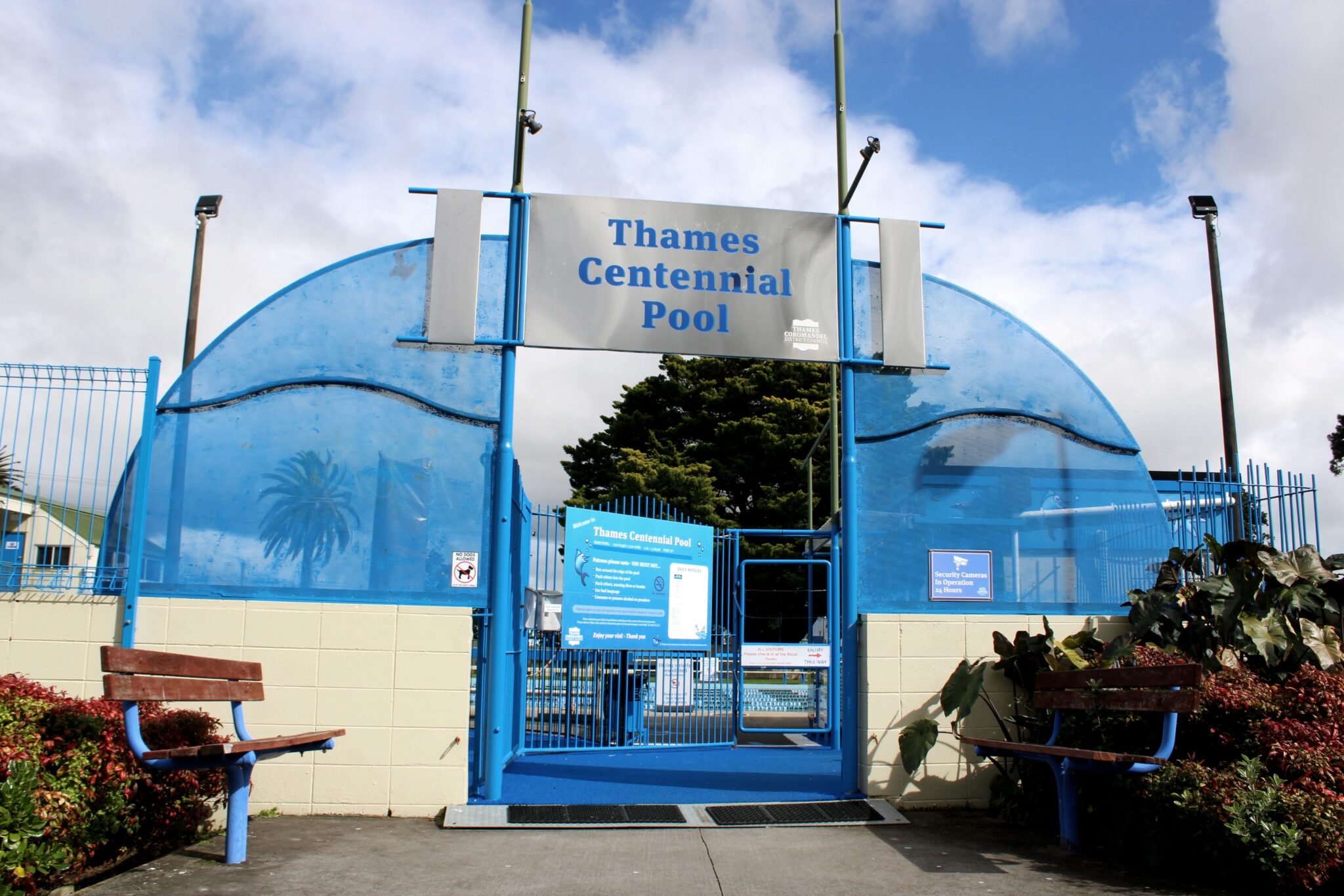
As part of a series on the future of Thames Centennial Pool, reporter Kelley Tantau explores the history of Taipari Park, its significance to Ngāti Maru, and long-standing plans to return the land to iwi.
The land beneath the Thames Centennial Pool has long held deep spiritual, cultural, and historical significance for Ngāti Maru.
Taipari Park, the current site of the pool, is built upon an early burial ground, or urupā, associated with Te Kauaeranga Pā – a settlement that was occupied by tribes of Marutūāhu.
According to Te Ara, the Encyclopaedia of New Zealand, Ngāti Maru are descendants of Marutūāhu’s son Te Ngako.
Its ancestral connection to Taipari Park was confirmed by the Māori Land Court in 1869.
But history outlined by Thames-Coromandel District Council showed that over time, the land passed out of Māori ownership, and portions of the urupā were taken for road purposes in the early 20th century.
In the 1930s, additional land was vested in the Thames Borough Council. In 1951, the land was declared a public reserve, and in the 1970s, the Thames Centennial Pool was constructed on the site.
Now, the council plans to remove the ageing aquatic facility from Taipari Park and return the land to iwi by the end of next year.
The decision has led to wider discussions about local funding, affordability, and the future of swimming facilities in Thames.
Te Tara o Te Ika Māori Ward councillor Michael Barlow, who has whakapapa to Ngāti Maru, told The Profile in a personal capacity that the history of Taipari Park carried a weight that “was not always visible” to those who hadn’t grown up with it.
He said there was a sense of responsibility and reflection whenever the urupā was discussed.
“It’s a place that deserves care, respect, and a level of understanding that goes beyond its use as a public facility,” he said.
According to the council, the construction and continued operation of public facilities on the urupā had been a source of concern for many years.
Planning documents from back in 2006 first signalled council’s intention to remove the facilities from Taipari Park and return the land to iwi, with the committment formalised in the Thames and Thames Coast Reserves Management Plan in 2019, and between 2015-2018, council undertook a historical investigation with Ngāti Maru on Taipari Park and the urupā.
Since 2023, Thames-Coromandel District Council and the Thames Community Board have undertaken public surveys, feasibility studies, and business cases to determine the best option for replacing the pool and meeting community needs.
Undertaken over 2023 and reported in February 2024, a feasibility study considered potential options to respond to the community’s needs. This assessed a potential 19 site options and showed the best site for a local facility was at the Richmond St courts, on leased land from Thames High School.
The latest decision, as of March, 2026, was the council’s Infrastructure and Finance Committee agreeing to recommend a more structured, long-term approach to progressing a new aquatic facility, shifting the project from a series of investigations into a co-ordinated programme of work.
And according to the council, the process has taken time because the project represented one of the biggest infrastructure decisions facing Thames, with all options needing to be “explored and costed” in a challenging economic climate.
Cr Barlow, who said many in his generation still cherished memories of the skate park that once occupied the site, and the memorial tagging created there for one of their mokopuna, said those personal experiences sat alongside the deeper history of the whenua.
However, he said a lack of wider understanding around the site’s significance had contributed to the length of time it’s taken to see the site returned to iwi.
“There continues to be strong community interest and support around the future of this site, alongside a growing awareness of its history and significance, and I do not believe the full extent of that significance has always been widely understood across the community, and that has contributed to how long this issue has taken to come to the point it is at now,” he said.
“From my perspective, it is important that as discussions continue, whether about the future of aquatic facilities or the whenua itself, they are grounded in meaningful engagement with iwi and in a genuine respect for the history of the site.”
BY KELLEY TANTAU