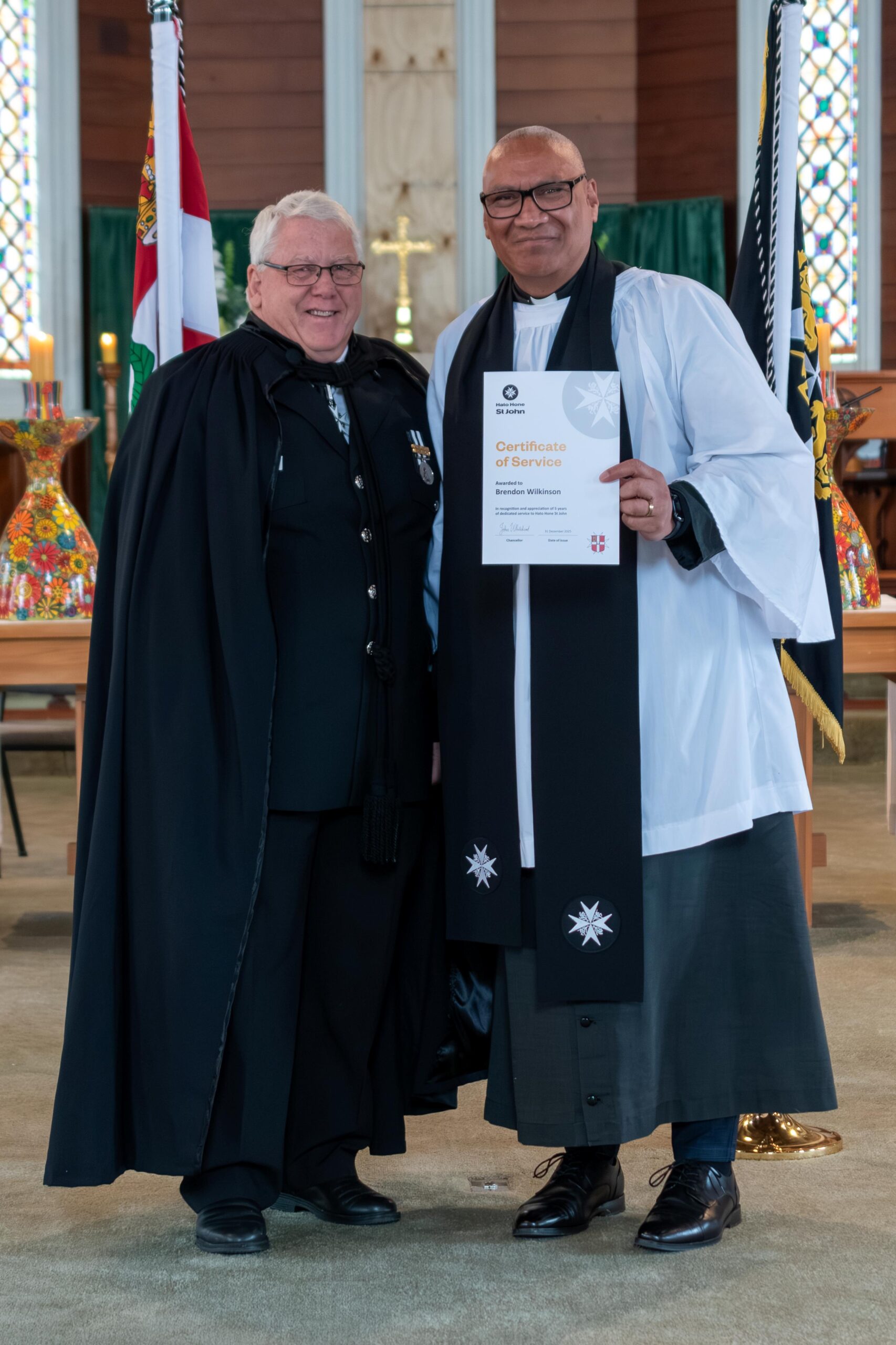
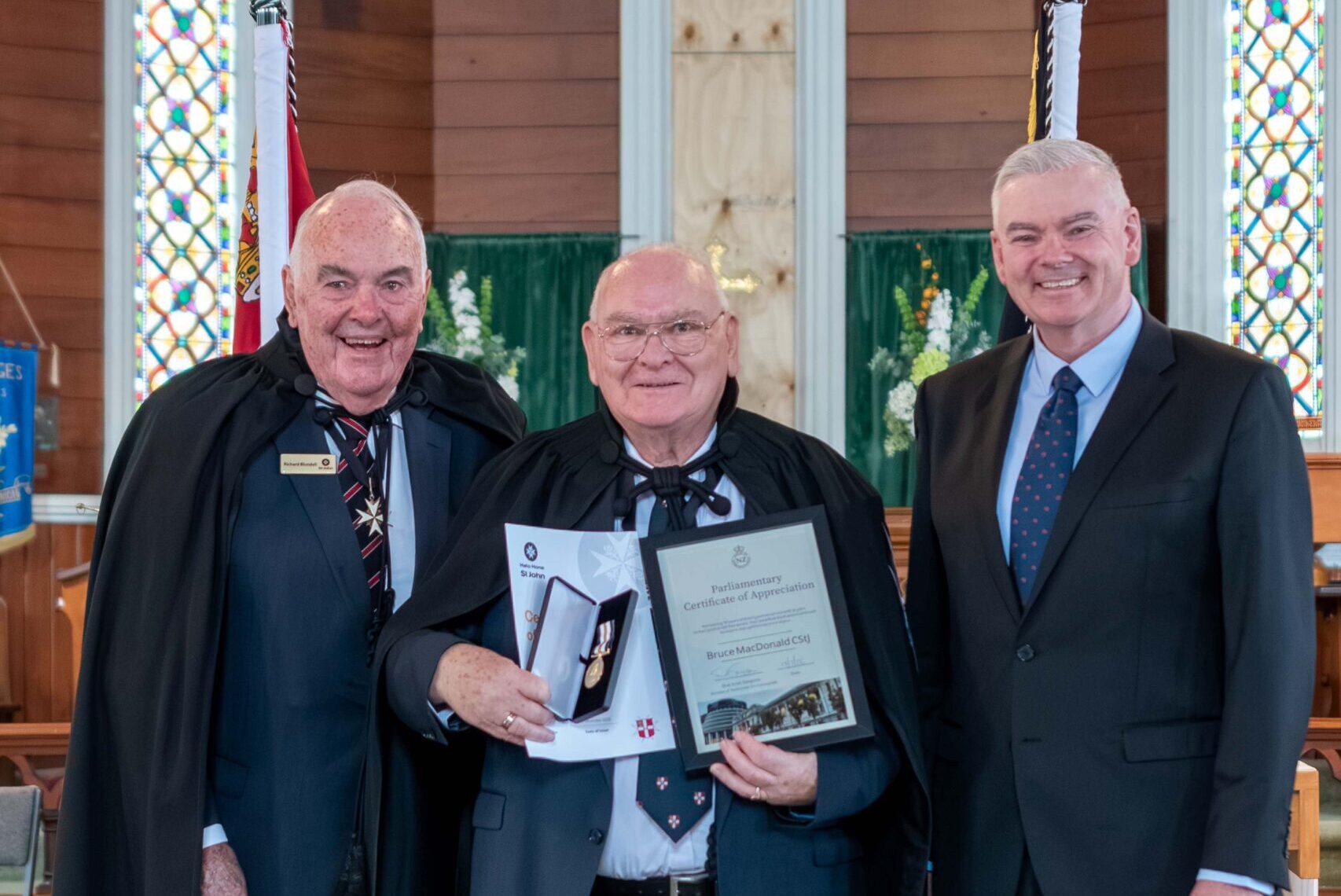
The Thames-Coromandel Order of St John Service Awards were held at St Georges Church on July 18. Sixty-four staff and volunteers were recognised for their service to the organisation, ranging from five years right up to 50 years’ service.
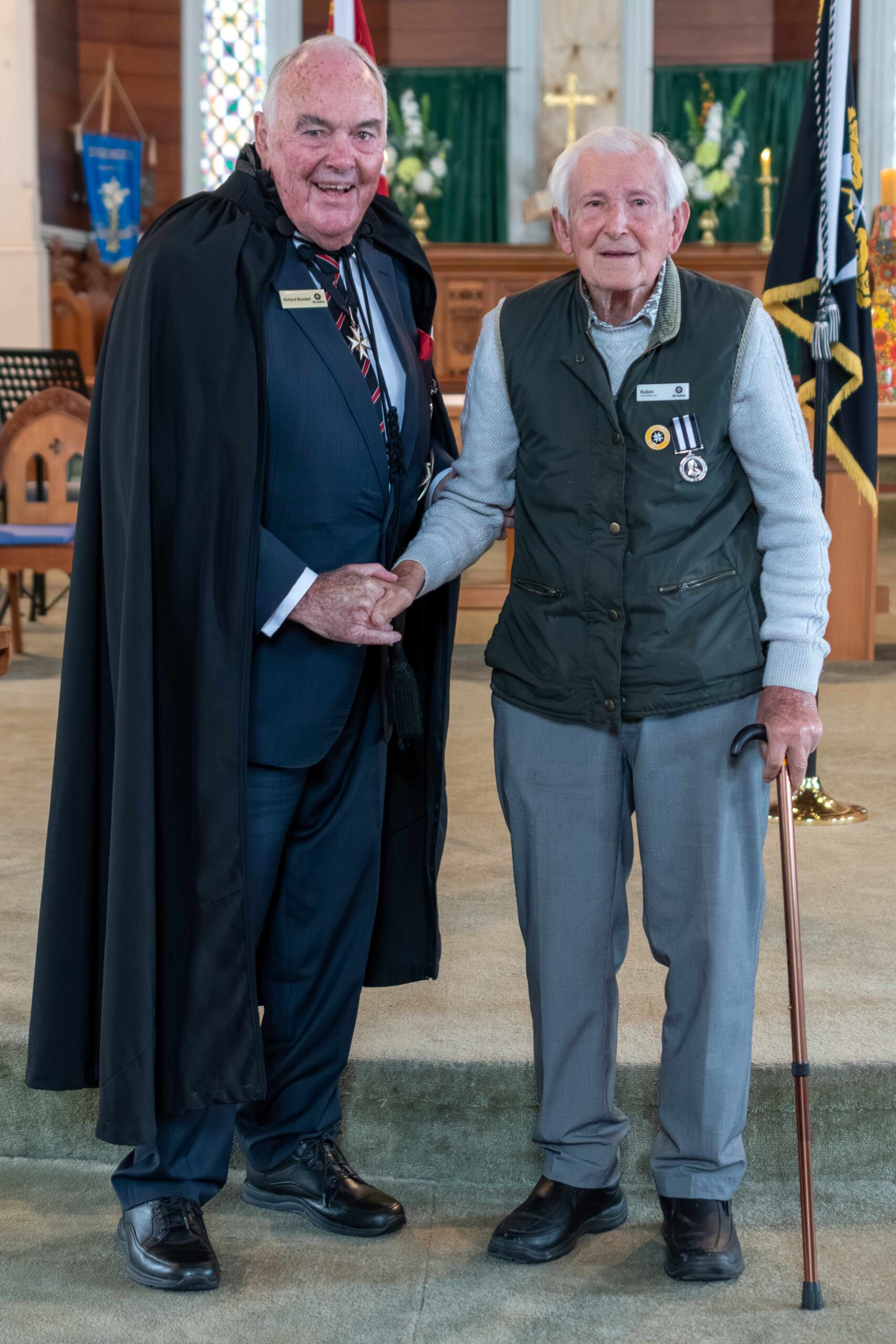
Former Hauraki-Coromandel district manager Bruce MacDonald was the sole recipient of the 50-year service medal, for ultra-long service to the Order. Robin Straker was also awarded a Chancellor’s Commendation, recognising his outstanding contributions to the community. ALICE PARMINTER attended the ceremony.
When Bruce MacDonald was presented with his 50-year service medal at the Order of St John Service Awards on July 18, the audience rose to its feet.
The standing ovation was an homage to a man who, after a rapid rise through the ranks, spent many years working in senior leadership roles for the benefit of the organisation and its people.
Bruce has seen St John change and grow over his years of involvement. When he first joined in Auckland as a cadet, he was only 10 years old.
“It was just a way to occupy time and meet friends,” he said.
“During the winter season, every Saturday I would spend running between football fields, patching up people.”
His very first ambulance callout, tending to a patient in the back of an ambulance, was at only 14 years old.
“We had been attending an event, just one of the seniors and myself in the ambulance… it was either that or there was nobody in the back.
“We were very resourceful back in those days.”
By 1995, Bruce was a regional training manager, moving on to a watch manager role in 2000.
His shift to Thames came in 2005, when he was appointed manager of the Hauraki-Coromandel District, a role he held until 2017.
Management had always been where he felt most comfortable, Bruce said, and he prided himself on always doing right by his staff.
“I have always empowered those below me to fulfil their function… one of my absolute pet dislikes is micromanagement,” he said.
“I’ve never tolerated it from above [or from] any of my leadership teams below me. And that has positive results for people.”
Life in the service had been both fulfilling and challenging, Bruce said.
“I’ve had some good saves over the years – I’ve pushed my clinical skills to the absolute limit,” he said.
“I enjoyed some of the complex cases, that didn’t come straight out of the book.
“But at the same time we also had to make very quick decisions sometimes… I’ve made some real tough decisions over the years.”
One of the toughest parts of the job, Bruce said, especially for new staff, was recognising that not every outcome would be good.
“One of the things that I was quite meticulous about in my clinical care was that I was deadly honest with people. And if we were in a grim situation, then I made them aware that we were in a grim situation. Albeit with the right words.”
Bruce was made a Commander of the Order of St John in 2020, for his services to the organisation. And even after leaving his paid role in 2017, he remained involved with St John through the Thames Area Committee.
“The area committees were the backbones of running the service,” he said.
“We were a community organisation… We exist at the benevolence of the community, and the area committees were that important link between what we were doing and what we needed.”
Collaboration between the service and its volunteer committees had always been essential, Bruce said.
And one of his first acts when he arrived in Thames was to get the district working cohesively together.
“The Hauraki-Coromandel had the first ever district committee in New Zealand, and it’s a very successful model that got replicated in a couple of other areas,” he said.
Bruce recently stepped away from his Area Committee role.
It’s the right time to be leaving the service, he said.
“It’s not the same environment today as it was when I was helping shape it,” he said.
“At some point in time you actually have to accept that you’ve done what you can and it’s time for other people to come along.”
Bruce does worry for the future of the service, however.
“Given the pressures that the service has on it, quite often crews are travelling further to get to places than… 20 years ago.
“But unfortunately funding hasn’t kept up with the modern demands of the population.
“There will never ever be enough paid resources from whatever organisation to be able to completely fulfil the community’s needs and it’s important that a community looks after itself in the first instance,” he said.
“And so volunteers are still important and so is local community leadership.”