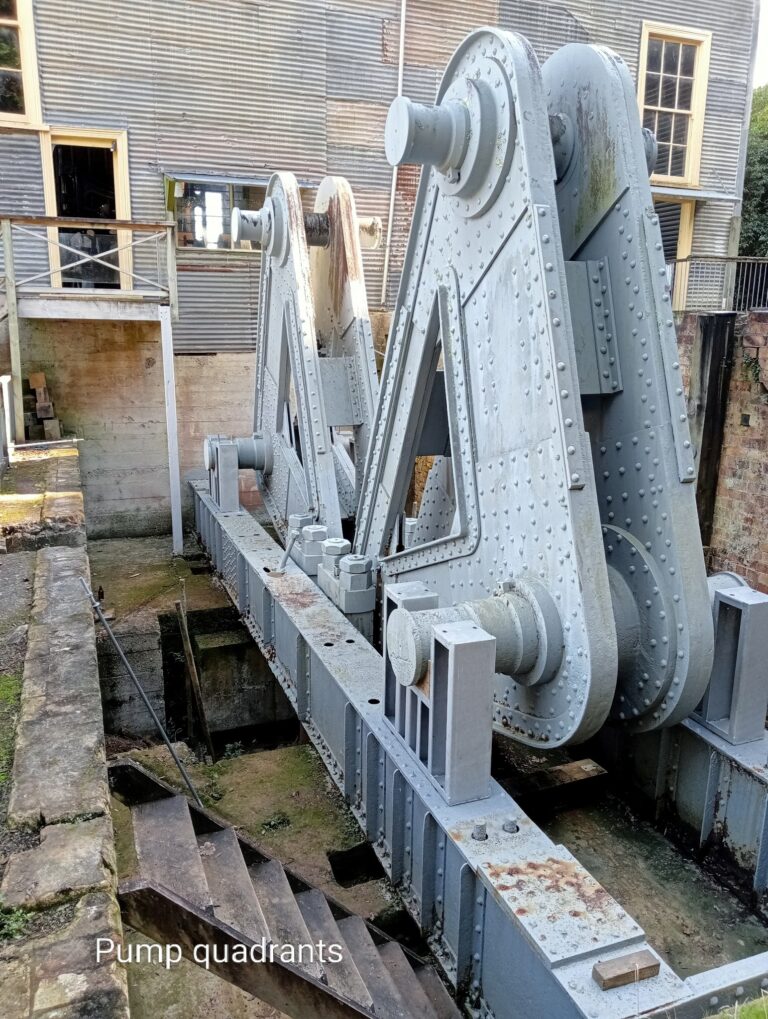
Restoration work is underway at Thames’ historic Bella Street Pumphouse, to conserve the site’s two 22-ton wrought iron quadrants.
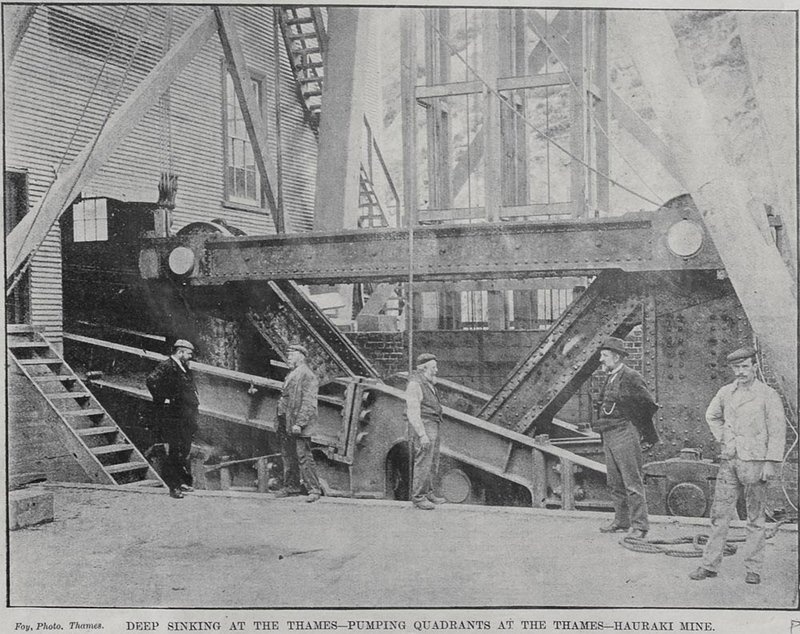
The triangle-shaped quadrants are part of the original pump mechanism which kept the Queen of Beauty Mine’s deep level prospecting shaft and associated cross-cut clear of water, until the site’s operations ceased in 1914.
Bella Street Pumphouse Society secretary Bain Cross said the restoration work began around 12 months ago. It has been costly and complex, but necessary to protect the historic asset from deterioration.
“That quadrant assembly is Category One-listed under Heritage New Zealand… In fact, it’s the only Category One listed structure or building in the entire Thames-Coromandel,” Bain said.
“That means that it’s actually of national importance. So I think we felt as a committee that it was worth really doing it properly.”
So far, the Society has fabricated and installed new bearings for the quadrants to allow them to sit in their original place above the 130-metre deep mine shaft.
It has also strengthened and reinforced the original brick walls surrounding the shaft.
“It was quite a mission to get [the quadrants] lifted – the crane struggled but he got them up,” Society chairman Rex Geary said.
“They were put there in 1898 and they’ve sat outside ever since, so they must be good materials. You could clean the bearings and use them now – they’re in perfect condition.”
The next stage of the restoration is grit blasting, priming, and painting the quadrants and bearings, to protect them from corrosion. Rex said it would cost around $25,000.
The Society is planning to apply for grants funding to cover the cost, and is hoping to get the work done over the summer once the weather is suitable.
Meanwhile, the Society’s further plans to build a replica of the original poppet head structure above the pump and level shaft have been put on hold due to escalating costs.
The original poppet head was made of kauri timber and stood nearly 20 metres tall.
Rex estimated the cost of building a replica at around $700,000.
“We got resource consent [around 10 years ago]… But the cost in that time has increased, especially the timber,” Bain said.
“There’s your first $100,000 just for four legs and nothing else, and then all the steel work… It would have been a lovely project.
“But really, for us, we’ve got some money but not that much.”