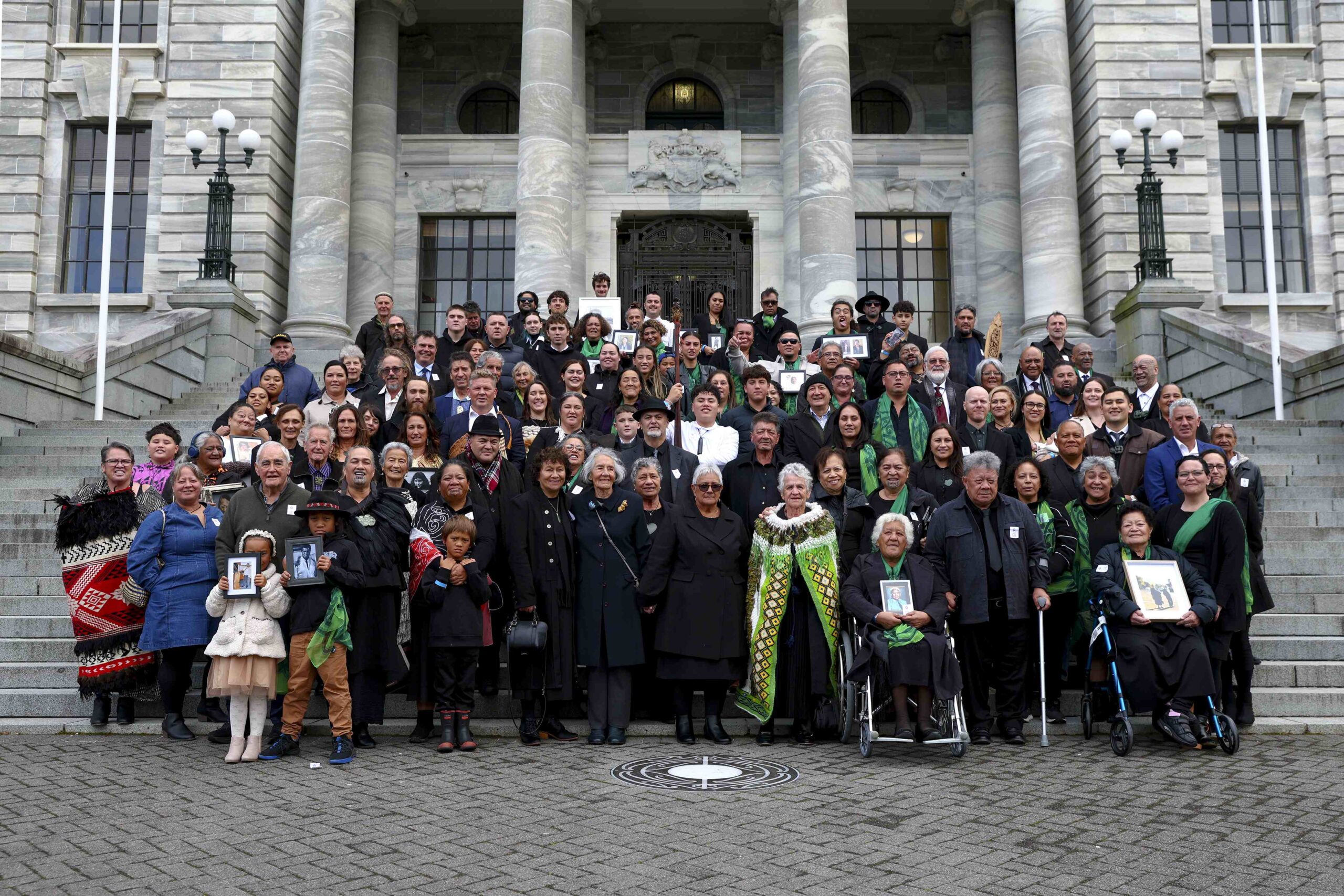
Three Hauraki iwi marked an historic occasion on May 13, as Parliament completed the third reading of their Treaty of Waitangi claims settlement bills, passing them into law.
Representatives of Ngāti Rāhiri Tumutumu, Ngāti Tara Tokanui, and Ngāti Hei attended the reading in Wellington. The passing of the three settlement bills has been 15 years in the making, with formal negotiations with the Crown beginning in 2011.
The long-running negotiations were settled with an acknowledgement of historical harm from the Crown, formal apologies, and financial and commercial redress packages worth a combined $20 million.
The settlements mark a way forward for the iwi and the Crown, as they look to build future relationships. But the historical hurts will persist for many.
Event speakers and social media commentators reminded people that the wrongs of the past would not be erased by apologies and redress, with many acknowledging the ancestors who fought for their rights and did not live to see the settlements finalised.
“The settlement does not compensate for all that was lost or taken, the damage and harm caused, but it can provide a seed for new beginnings, for our tamariki and mokopuna,” Ngāti Hei said in an online statement.
A statement from Ngāti Rāhiri Tumutumu had similar sentiments, saying, “the negotiations process was brutal at times. It pitted iwi against iwi, forced us to fight for what should never have been questioned – our pā, our wāhi tapu, and the urupā of our rangatira, Te Ruinga. It brought to the surface many of the injustices our people have endured for generations.”
A spokesperson for Ngāti Tara Tokanui said the passing of the final reading was not an ending but a continuation, a recognition long overdue, and a platform from which the iwi can begin to build a stronger future.
“While no settlement can fully restore what was taken, we acknowledge this milestone with mixed emotions: pride in the resilience of our tupuna, our iwi, our post-settlement governance entity and the sober commitment to the work ahead for our mokopuna,” the spokesperson said.
“Underpinning the Ngāti Tara Tokanui BiIl is the recognition of partnership. A number of our sites returning are cyanide-leaking goldmine sites which we are seeking to restore through genuine partnership arrangements. Yet, we are already seeing attempts to diminish those commitments, as well as the wider Crown assault on the Treaty principles, an abhorrent hypocrisy that speaks partnership in this Parliament while legislating it out of existence. Partnership is a living construct, it cannot be hollowed out in one place and spoken into being in another. We can only put Aotearoa right through working in true partnership between iwi – Ngāti Tara Tokanui – and the Crown.”
Treaty of Waitangi Negotiations Minister Paul Goldsmith said the passage of the settlement legislation was deeply significant.
“While no settlement can fully compensate for the Crown’s injustices… I sincerely hope this redress will support these Hauraki iwi to strengthen their economic, cultural and environmental aspirations, and provides a platform for enduring relationships between the Crown and iwi for generations to come.”
THE REDRESS PACKAGE
Ngāti Rāhiri Tumutumu will receive total financial and commercial redress of $5.5 million; the right to purchase two commercial redress properties; and the vesting of 17 individual and two joint cultural redress properties.
Ngāti Tara Tokanui will receive total financial and commercial redress of $6 million; the right to purchase for two years after the settlement date, the Paeroa College school site (land only) subject to its lease-back to the Crown; and the vesting of seven individual and two joint cultural redress properties.
Ngāti Hei will receive total financial and commercial redress of $8.5 million; the ability to purchase three commercial properties; and the vesting of 15 individual and two joint cultural redress properties.