Thames conservation activists celebrated a win at last week’s public meeting addressing the controversial Conservation Amendment Bill, but say pressure on the government needs to remain high.
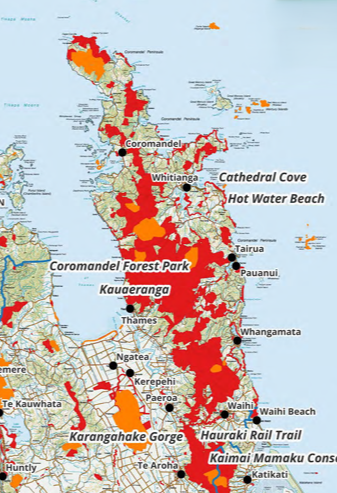
The June 25 meeting was held mere hours after Conservation Minister Tama Potaka announced a backtrack on a controversial clause in the bill, which would allow for the potential exchange or disposal of up to 60 per cent of conservation land.
The Minister made the announcement at the Environmental Defence Society conference in Auckland. He acknowledged the public outcry over the bill.
“We know how dear our pristine landscapes are to the hearts of New Zealanders and we will never dispose of those iconic landscapes,” Minister Potaka said in a subsequent press release.
“But we were not clear enough about how the Conservation Amendment Bill improves outcomes for conservation… We have heard loud and clear the concerns about the potential disposal or exchange of conservation land, and we are acting on those concerns by removing those provisions from the bill.”
However, Regional Development Minister Shane Jones told media there would still be a focus on economic activity on conservation land.
“The reality is that there are economic affairs that currently take place on DOC land – quarrying, mining, a lot of tourism, and we want to ensure that economic matters have status in broader conservation debates,” he said.
“It’s ridiculous to assert that on 33 per cent of the land there should be no economic activity. We can’t afford this Luddite thinking.”
Those at the Thames meeting, including Coromandel Watchdog chair Catherine Delahunty, said the fight was not yet over, and called for the entire bill to be scrapped.
“This is what happens when the government drafts an utterly unacceptable bill and is forced to change it in the middle of the submission period. We want the Minister to immediately dump this draft and rewrite an amendment that doesn’t prioritise development on Department of Conservation (DOC) land,” she said.
The biggest cause for concern, she said, was proposed changes to the purpose of the Conservation Act.
The amendments explicitly outline a shift in focus for DOC, with wording allowing the department to “recognise the economic opportunities that arise from the use and development of land and other resources… to enable this use and development to the greatest extent practicable”.
Catherine said the current bill still undermined the fundamental purpose of conservation land, which was protection, and places economic development at an equal or higher priority.
However, Catherine said she was heartened by the numbers of submissions made for the bill so far – more than 24,000 across the country – and urged people to make sure they still have their say.
“You just talk your own truth when you’re writing to a select committee… you don’t have to use legal language. It can just be a couple of sentences,” she said.
DETAILS: Public submissions close on July 2. Visit www3.parliament.nz/en/pb/sc/make-a-submission to have your say.