
Copying might be the sincerest form of flattery, but it could be an expensive habit when it comes to rubbish tags.
Western Bay of Plenty District Council has been seeing some of its residents take the idea of reuse a little too far, with contractors spotting pay-as-you-throw rubbish tags that have been photocopied, recreated, or painstakingly taped or stapled back together after use.
But council says those shortcuts could come with a $200 infringement fee.
Between October, 2025 and April, 2026, 195,500 PAYT tags were sold, and 216,165 rubbish bins were collected. That’s 20,665 more collections than tags sold.
While the difference couldn’t be directly attributed to fraudulent tags, council’s contractors were identifying more reused and altered tags – and counterfeiters were getting creative.
“The idea behind PAYT is simple – the more waste you produce, the more you pay to dispose of it. It gives households a financial incentive to reduce what goes into the red bin and make use of recycling and food scraps services,” council’s general manager infrastructure Brad Singh said.
“We know the vast majority of people are doing the right thing, but using a fraudulent tag means someone is getting a rubbish collection without paying for it.”
The district’s kerbside service was introduced in 2021, and has a target of diverting around 1,800 tonnes of material from landfill each year.
Brad said one of the key benefits of PAYT was that the cost of collecting and disposing of rubbish was paid for by the people using the service, rather than through general rates.
“PAYT is a fully user-pays service – it isn’t funded through rates – so every red-bin collection needs to have a genuine tag. When people use fake tags, everyone else ends up carrying the cost, which isn’t fair on those doing the right thing.
“We’re increasing our monitoring, and people should be aware that if a fraudulent tag is found, the address will be issued with an infringement.”
Thames-Coromandel District Council said it was aware that counterfeit tags were sometimes identified by its contractor’s staff; however, it couldn’t determine the extent of it or attribute any difference between tag sales and collection figures to a single cause.
“Our contractor routinely monitors bin and tag presentation and will place a sticker on ‘non-compliant’ bins, and not empty them. Most times this is because a bin is put out without a tag or it’s not properly attached, rather than fraudulent tags,” a spokesperson said.
Hauraki District Council also had no figures available to compare tag sales with the number of bins collected, but said its contractors regularly checked bins to confirm that the tags displayed were genuine and valid.
“We are unable to provide information about the number of fraudulent tags identified in our district. However, we have processes in place to monitor compliance and address any issues that are identified.”
The cost of a rubbish tag varies across the region, from $5.20 in Western Bay of Plenty, to $8 in Hauraki, and $9.30 in Thames-Coromandel.
BY KELLEY TANTAU
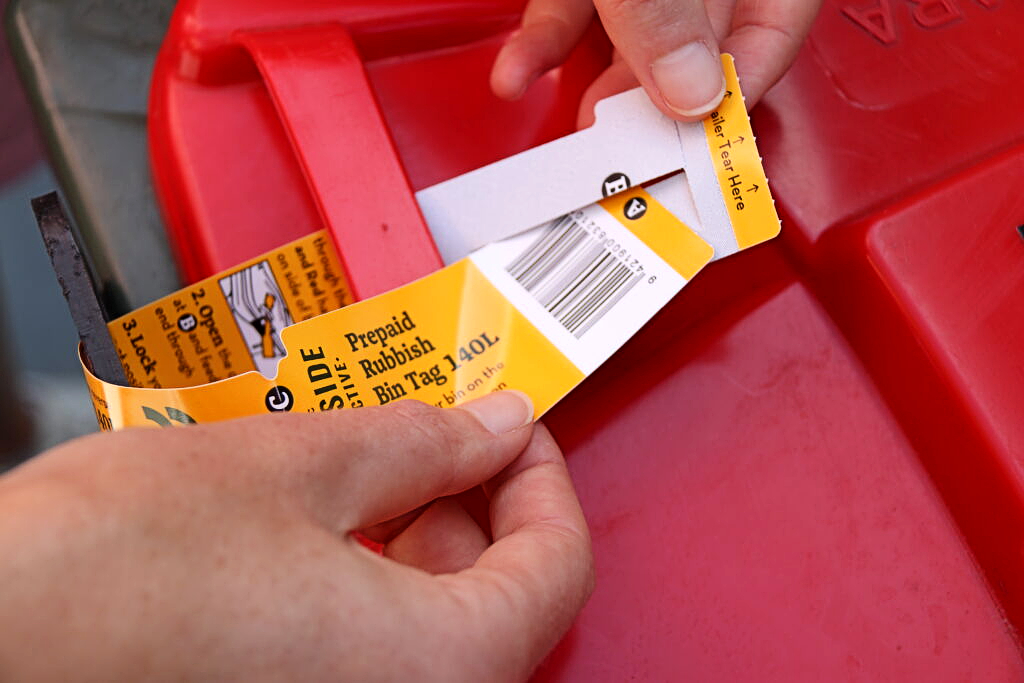
Photocopied, recreated, and reused rubbish tags are turning up in the Western Bay of Plenty. Photo: SUPPLIED