
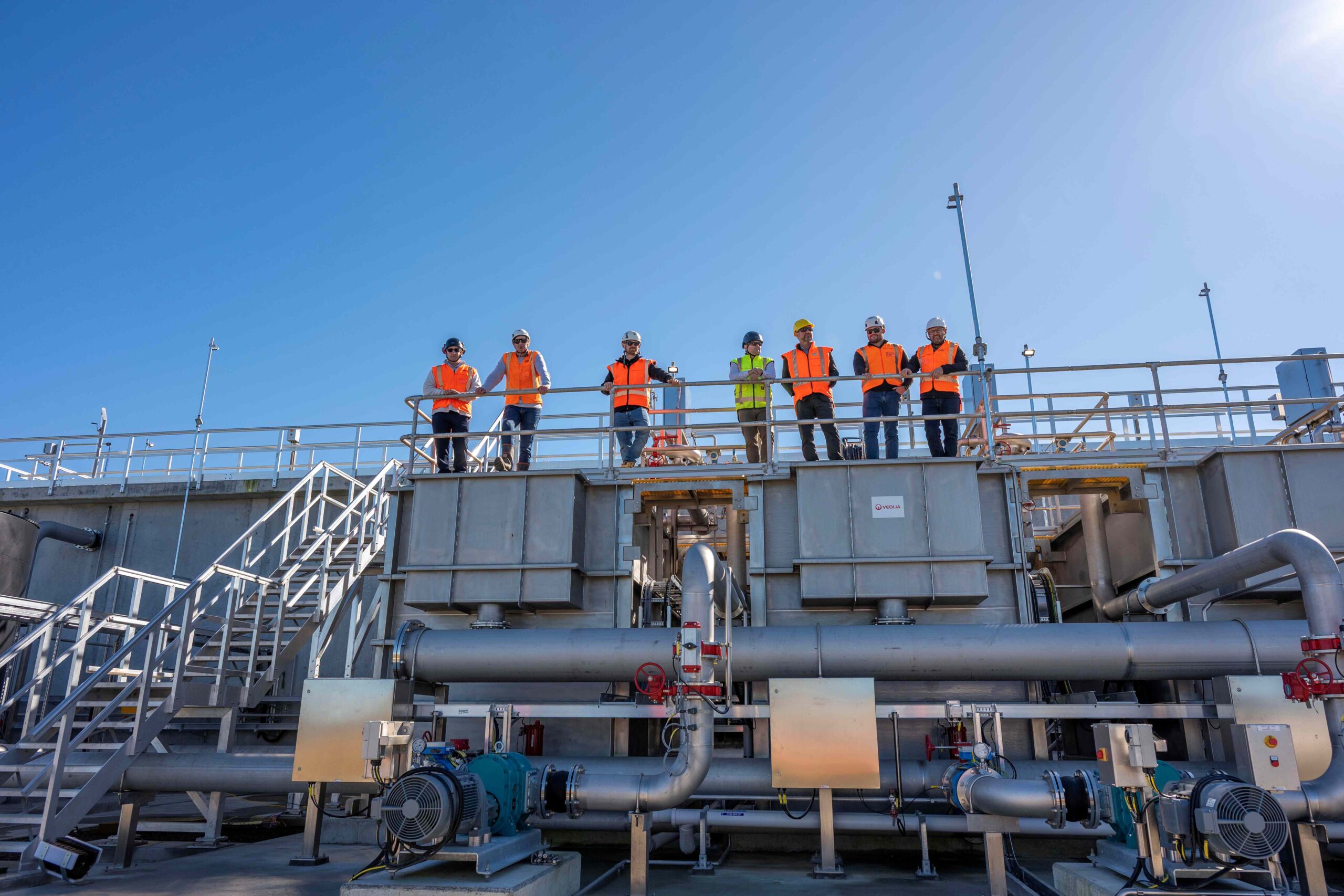
One of Hauraki District Council’s most ambitious infrastructure projects is expected to be fully up and running by the end of October.
The $45 million Paeroa Wastewater Treatment Plant sits alongside the town’s existing treatment ponds just off Irwin Rd.
It is a fully automated, modern treatment plant fitted with membrane bioreactors, which work like very fine filters to treat the water to a high standard.
The plant upgrade will cater for a population of up to 7000, and the build has also been designed to allow for additional tanks and pumps to be added when future population growth requires it.
“It’s always a big scary thing when you’re spending that kind of money, but [we’re] very pleased with how it’s looking,” Mayor Toby Adams said.
“When government talks about doing the basics better, that’s all we’ve ever been doing.
“Our ‘nice-to-have’ is making sure that they’ve got drinking water standards that meet the criteria and good water and wastewater infrastructure.
“Now we’re in a position where we’re handing over really, really good assets [to Waikato Waters].”
The wastewater treatment plant has already begun operating in a limited capacity, and will be fully commissioned by the end of October.
However, the existing treatment ponds will remain as a fall-back system for overflow from storms.
The new plant would also be better for the environment, council said. The membrane technology will treat wastewater to a higher standard, and the plant also has upgraded equipment for extracting and dewatering solids, and odour control.
Some of the treated water will be retained on-site for use as wash water, with the rest being released back into the Waihōu River. The other byproducts of the treatment process, sludge and other solids, will be sent to landfill.
Spartan Construction project manager Chris McGillivray said there were two aspects to wastewater treatment.
“One is the capacity – so we’ve got the future capacity available within this plant, and then the other is the effluent quality. And this is going to be way, way better effluent quality than what we’re [currently] getting.
“The beauty of the final effluent is that it’s treated to a very high standard… You wouldn’t drink it, but you’d struggle to tell the difference beside drinking water.”