
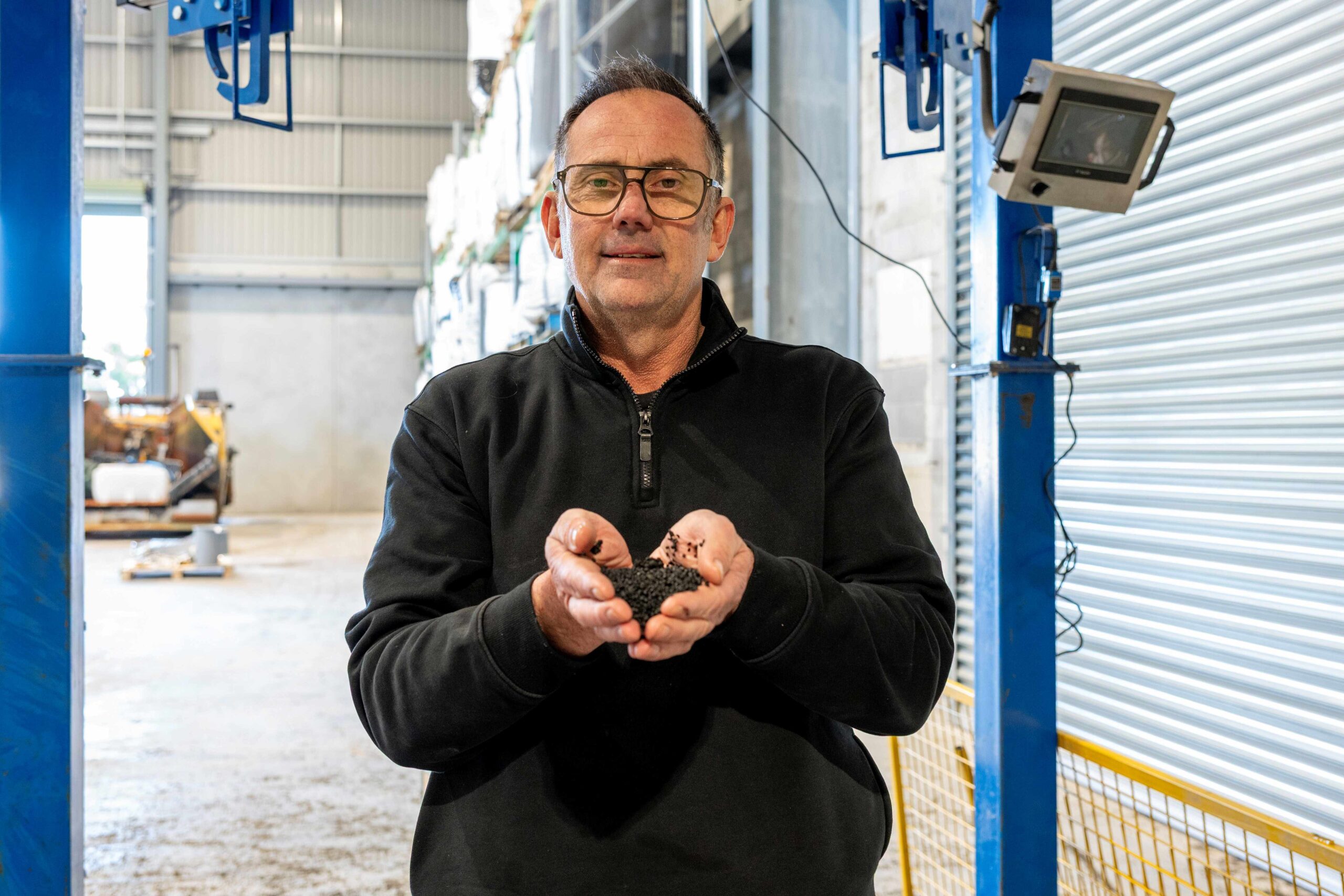
Up to 10,000 tonnes of recycled tyre waste could be making its way into New Zealand’s roads and rubber matting industries annually with the opening of an innovative new business.
Rubber recycling and manufacturing company Cyclenomics officially opens on August 15, eventually creating around 35 jobs.
Limited production of a devulcanised rubber crumb material has already begun at its Southbridge Industrial Park site south of Kōpū.
Devulcanised rubber is recycled rubber that’s been chemically broken down into a soft, moldable elastic material that can be reused to make new products.
It produces very little waste, and can be endlessly recycled.
“Devulcanisation came along just before Covid – it’s been around for years but the Chinese have spent a lot of time perfecting it to do large volumes,” Cyclenomics CEO Matt Carter told The Profile.
“There’s so many benefits here… There’s very few rubber manufacturers left [in New Zealand] so this is bringing manufacturing back. And virgin rubber is only grown on rubber trees in Malaysia and Brazil, so it’s scarce, it’s expensive.”
Matt said the process will make a big dent in the number of old tyres shipped overseas as waste.
“New Zealand produces about 65,000 tonnes of end-of-life tyres [annually] – about 35,000 tonnes are being swapped out for coal at Golden Bay’s cement kiln and pretty much the rest is being exported to make into someone else’s problem,” Matt said.
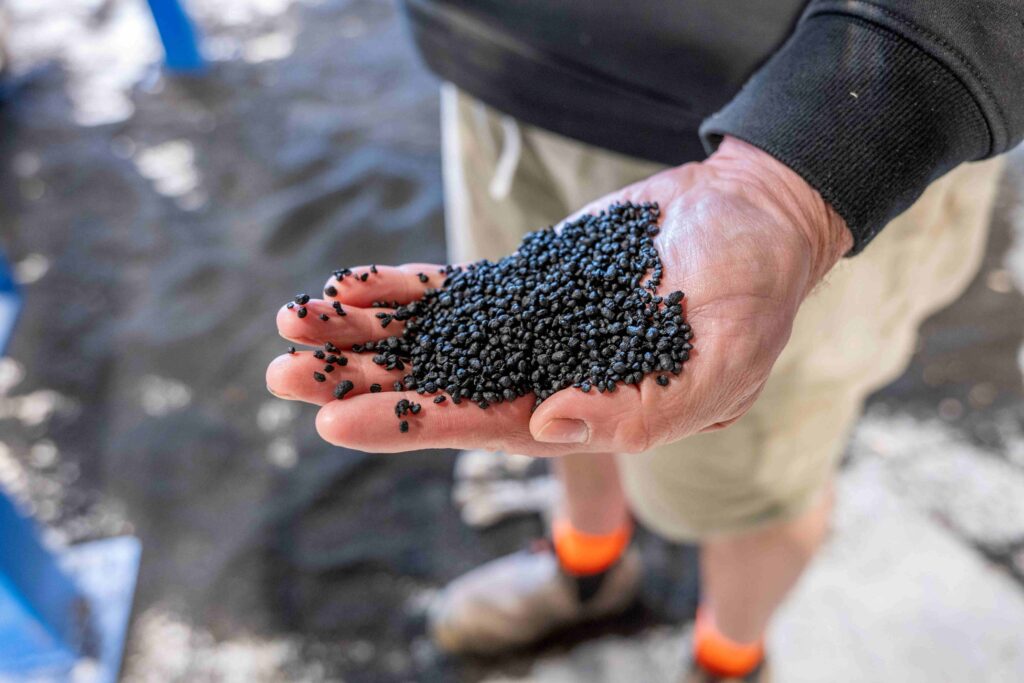
The recycling process can reclaim up to 95 per cent of a tyre – mostly rubber and steel. Matt plans to eventually install a secondary shredder, to clean up the steel so it can also be reused in New Zealand.
“[The steel has] chunks of rubber still in it – no one in New Zealand will take that, so it’s being exported at the moment.”
The only part that’s not currently reusable is a small percentage of a nylon polyester blend fibre. “I’m struggling to find a home for [it], if anyone’s got an idea or a purpose for some dirty polyester and nylon.” The roading industry would be the first to benefit, Matt said.
“Bitumen’s almost brittle at room temperature… when it gets cold it cracks and then water goes through and you’ve got a pothole.
“When you add rubber to it… it stops the cracks – less repairs and it lasts longer. The problem with New Zealand’s roads is they don’t use enough of this virgin rubber compound because it’s very expensive.”
The company will produce a direct replacement for the virgin rubber product currently used in roads, and has already conducted a successful trial with one of the country’s biggest roading contractors, who has committed to using the product when the new roading season begins in October.
“We’ve priced our product to the market to encourage NZTA to use it widely… It’s going to be good all round.”
The next stage for Cyclenomics is a manufacturing line to produce rubber mats for the agricultural sector.
For Matt, the company is about practical circularity and sustainability over profit. Cyclenomics is housed in a refurbished mill, and the building is equipped with solar panels.
“The last business I had was Carter’s Tyre Service… [I was] always being asked by our customer, how can we dispose of our tyres more sustainably, because nothing’s really been available.
“So when vulcanisation came along, I thought, well there’s a nice solution.”