Around 50 people gathered in Thames on March 8 to mark International Women’s Day – not with a celebration but with words of protest.
The public meeting, held at St James Church at 2pm, was attended by around 50 people.
Its purpose was to discuss the impact of last year’s abrupt amendments to the Equal Pay Act which saw the cancellation of 33 active pay equity claims for mostly women-dominated occupations, and talk about possible future action.
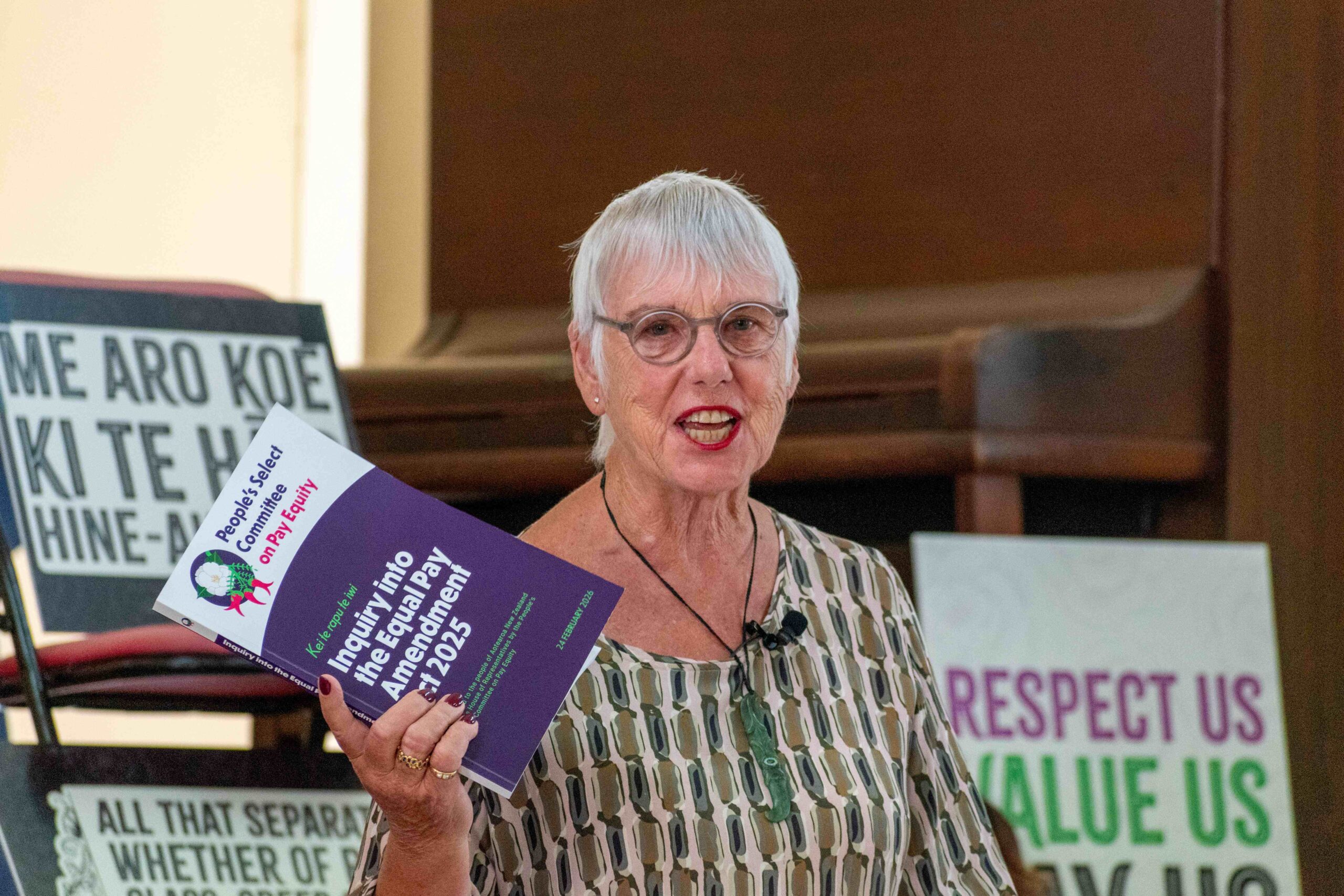
Guest speaker Steve Chadwick, a former Minister of Women’s Affairs, said it was apt she was speaking about pay equity on Women’s Day.
“The Equal Pay Act was an amazing process and an amazing victory, but now we’ve baked in inequality again – [the Act] was decimated overnight,” she said.
“This was the ultimate insult to these low-paid workers who had their agreement reached and then had the blanket pulled out from under them overnight. That impacted over 180,000 women around the country.”
Ms Chadwick was one of the former MPs heading the People’s Select Committee on Pay Equity.
The committee was formed in response to the Equal Pay Act Amendment Act 2025, passed on May 6 last year.
Its members alleged the legislation changes were rushed through secretly “in bad faith”, and didn’t allow the public a chance to have a say.
The committee has sought its own public feedback, hearing more than 1500 submissions from men and women, unions, employers, advocates, and experts over the course of 10 public hearings.
Its findings were released on February 24 with a number of recommendations to the government.
The key recommendations the report made were that the amendments should be repealed; the cancelled claims should be reinstated without requiring them to restart the process; community and iwi organisations delivering public services should be fully funded to deliver any relevant pay equity settlements; and improvements should be made to the government’s funding and contracting processes for health, social services, and education services to support future pay equity settlements.
At the public meeting, Ms Chadwick explained the Select Committee’s findings to the crowd, before urging attendees to take action through political activism – particularly encouraging people to contact their local MP, and to vote in the upcoming election.
“I think we’ve all got to be pretty noisy this election. Start putting the pressure on.
“It’s the only mechanism we’ve got.”
Her sentiments were echoed by the other presenters, many of whom are part of a new local activism group called Women Weaving Solidarity.
“We’re determined to make it an election issue because it affects so many of the population,” group member Michele Fill said.
“Weaving Solidarity is different women … looking to the future and looking at changing it – we are not going to put up with a right-wing, racist, bigoted government that is doing what it’s doing to women and children in this community and in New Zealand.”
DETAILS: The full report is available online at www.payequity.org.nz/report.