
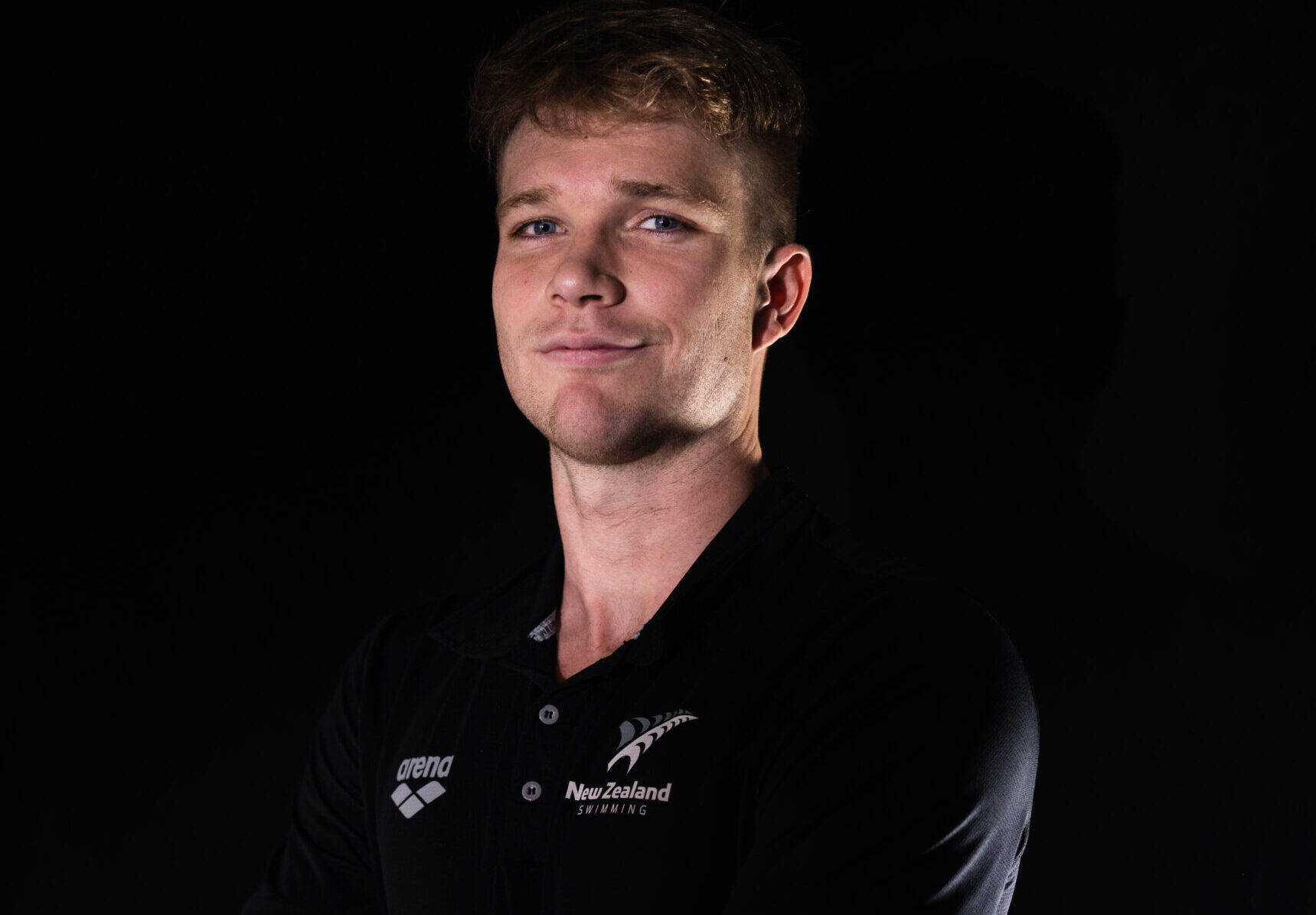
As a teenager, Jack Hendy travelled from Waikino to train at Thames Centennial Pool, setting records and discovering his potential. Now an international swimmer, he says a replacement facility is vital to give the next generation the same opportunity. Reporter KELLEY TANTAU talks with Jack as part of The Profile’s deep dive into the Thames Pool replacement.
For Jack Hendy, some of the most important moments of his swimming career happened at the Thames Centennial Pool.
At 14, the Waikino teenager was making the trip from his home in the Karangahake Gorge to train, often working through sessions largely on his own.
He had no coach guiding every stroke, but he had somewhere to swim, he says, and the motivation to keep turning up and working hard.
“Back then, I was largely training myself, so I was pretty shocked when I went on to win at Division 2 Nationals and then make a final at National Age Groups. That was probably the first time my family and I realised there could actually be something more in swimming for me.”
Jack tells The Profile that as his swimming progressed, his family decided to move to Australia, because the Thames Valley region not having access to a year-round pool made it “increasingly difficult to pursue the sport at a higher level”.
Since then, he has gone on to represent New Zealand internationally, including at the World Short Course Championships and World Cup level.
He won two gold medals at the 2024 Oceania Championships and became the New Zealand national champion in the 50m butterfly in 2025.
Jack still holds Thames Valley swimming records that were set at Thames Centennial, and now, with the district council committed to closing the pool in Taipari Park and returning the land to Ngāti Maru by June, 2027, he hopes a replacement will give the next generation the same chance to discover what they can achieve.
“A local pool can be the difference between a young person discovering their potential and never getting the chance to find out. I’m probably a good example of that,” he says.
“I came from a very small place and didn’t have everything around me that a swimmer in a major city might have had. But because there was a pool I could get to and train in, I was able to qualify for Nationals and start proving to myself that I belonged at that level.
“Not every swimmer is going to become an international athlete, but that’s not really the point,” he says. “A local pool gives young people access to swimming skills, fitness, friendships, competition, confidence, and a place to belong. For some of them, it can also open a pathway they never knew existed.”
Council has confirmed that funding to construct a new pool in Thames will be included in the draft 2027-2037 Long Term Plan, which will go out for public consultation early in 2027.
It has committed to closing the pool in mid-2027 in order for it to be removed by the end of 2027. However, council said conversations with iwi have indicated that, in good faith, delays to the deadline for moving the existing pool off the urupā are acceptable if it enables a smooth transition to a new pool for the community.
At a September meeting, Thames Needs a Pool campaign member Anne Barker urged Thames-Coromandel councillors to follow through on commitments made during the election. She said the council should aim to have a new pool built within the first three years of the LTP.
“At the moment, the situation is that the council is removing a community built facility in June with no definitive plans for its replacement. So I ask you… please think creatively about how you can contribute constructively, positively, altruistically, to not only the Thames community, but the entire region. We need this pool for so many reasons and for so many people.”
For Jack – who is now based in Newcastle, Australia, where he continues to train and race as a sprint swimmer while also running his own coaching business, AquaJack Fitness – the future of the Thames pool is personal.
If there was no pool in Thames when he was growing up, he admits he doesn’t think his swimming career would have followed the same path.
“I was already travelling from Waikino to Thames just to get access to a pool. If Thames hadn’t been there either, I don’t know where I would have trained consistently enough to qualify for Nationals or achieve those early results.
“Ironically, the lack of a year-round facility in the Thames Valley region eventually contributed to us moving to Australia so I could properly pursue swimming. So I’ve experienced both sides of it: how valuable having a local pool can be, and how limiting it becomes when the facilities aren’t there,” he says.
“That’s why I feel so strongly that the next generation deserves access to one.”
BY KELLEY TANTAU