A Paeroa non-profit has been blown away by an outpouring of community support following the storm events of recent weeks.
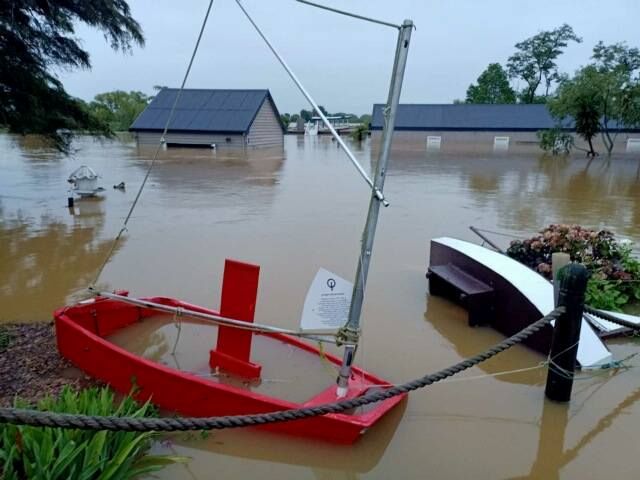
The garden at the Historical Maritime Park and Museum, which sits on the riverbank just north of Paeroa, spent several days under metres of water after the storm blew through.
Early weather warnings allowed the park’s team to evacuate animals from the premises, tie down furniture, and remove artefacts to higher ground. But manager Fleur McDermott said the extent of the devastation once the waters had receded still took them by surprise.
“We didn’t anticipate it to be as bad as what it was… we’ve probably been worse off in the garden areas from this [storm] than we were for Cyclone Gabrielle,” Fleur said.
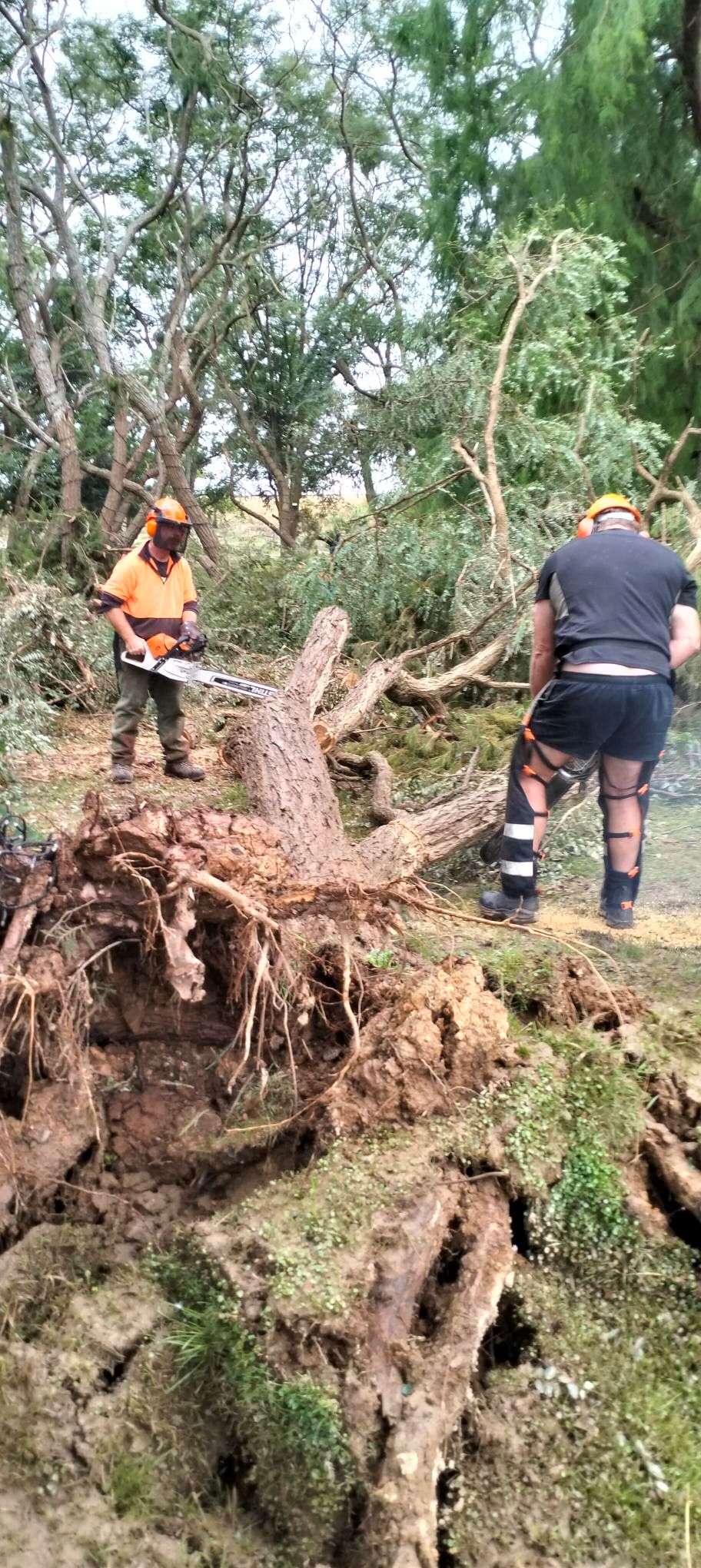
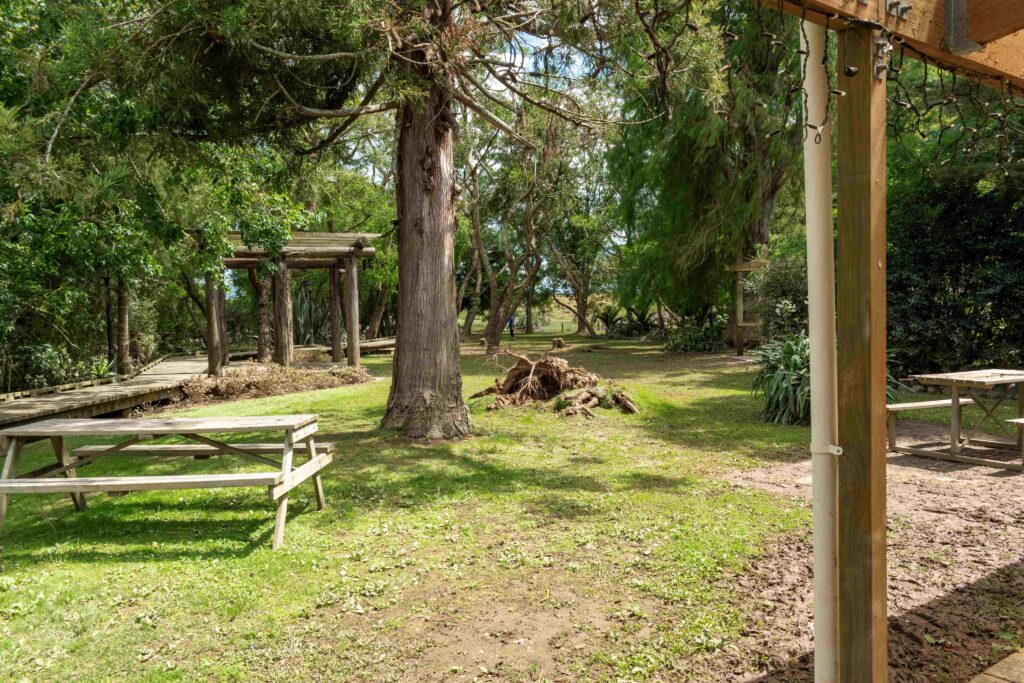
“We had that high wind… I’ve never heard wind like that in my life. You couldn’t even walk through [the lawn] – it was just full of trees, big limbs, all smashed.”
Faced with months’ worth of backbreaking cleanup work, Fleur put out a call on social media for volunteers.
“We have a lot of very large trees down and debris everywhere that needs manpower to tackle this,” the posts read; “we are seeking assistance with the cleanup efforts and would be grateful for any volunteers who could spare time over the weekend to help restore the park to its former glory.”
The response, she said, was overwhelming and humbling.
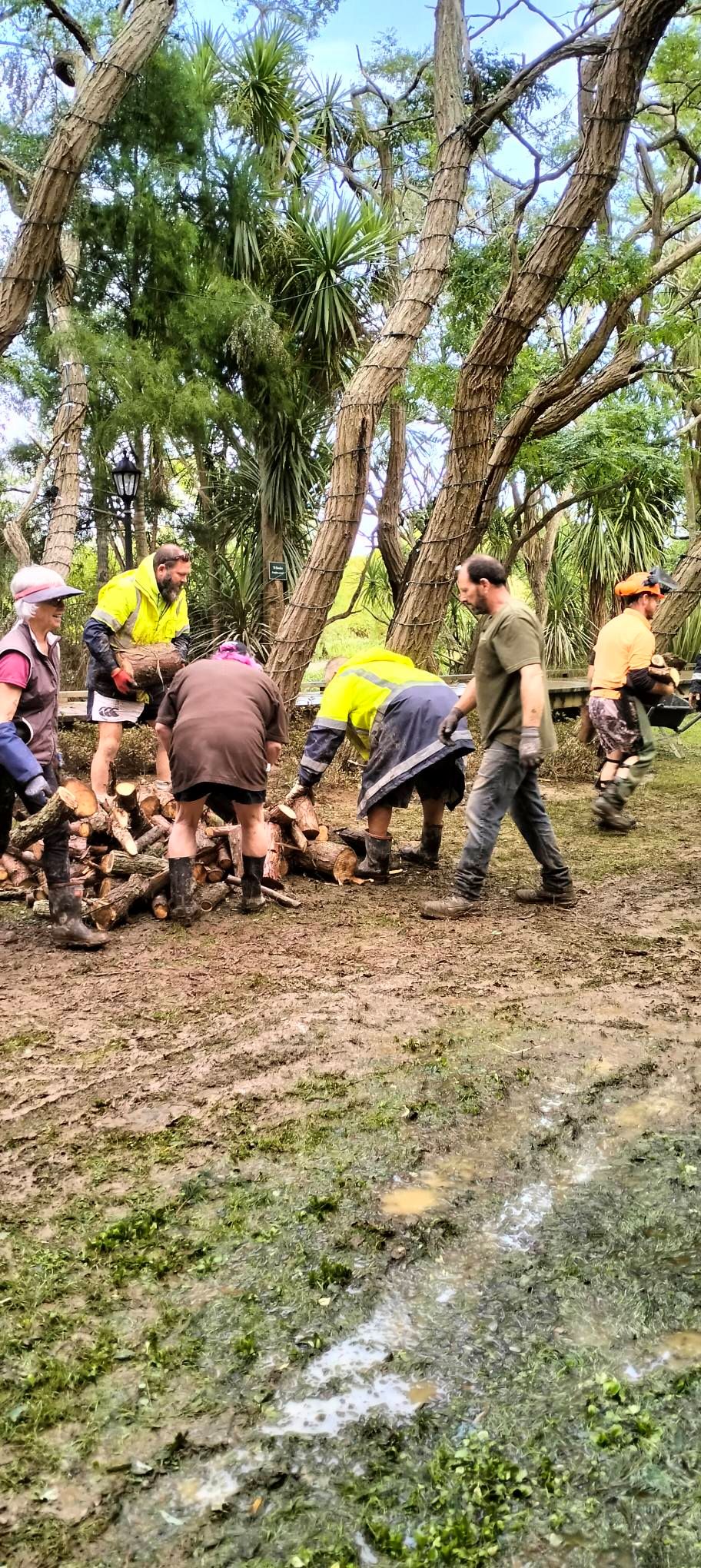
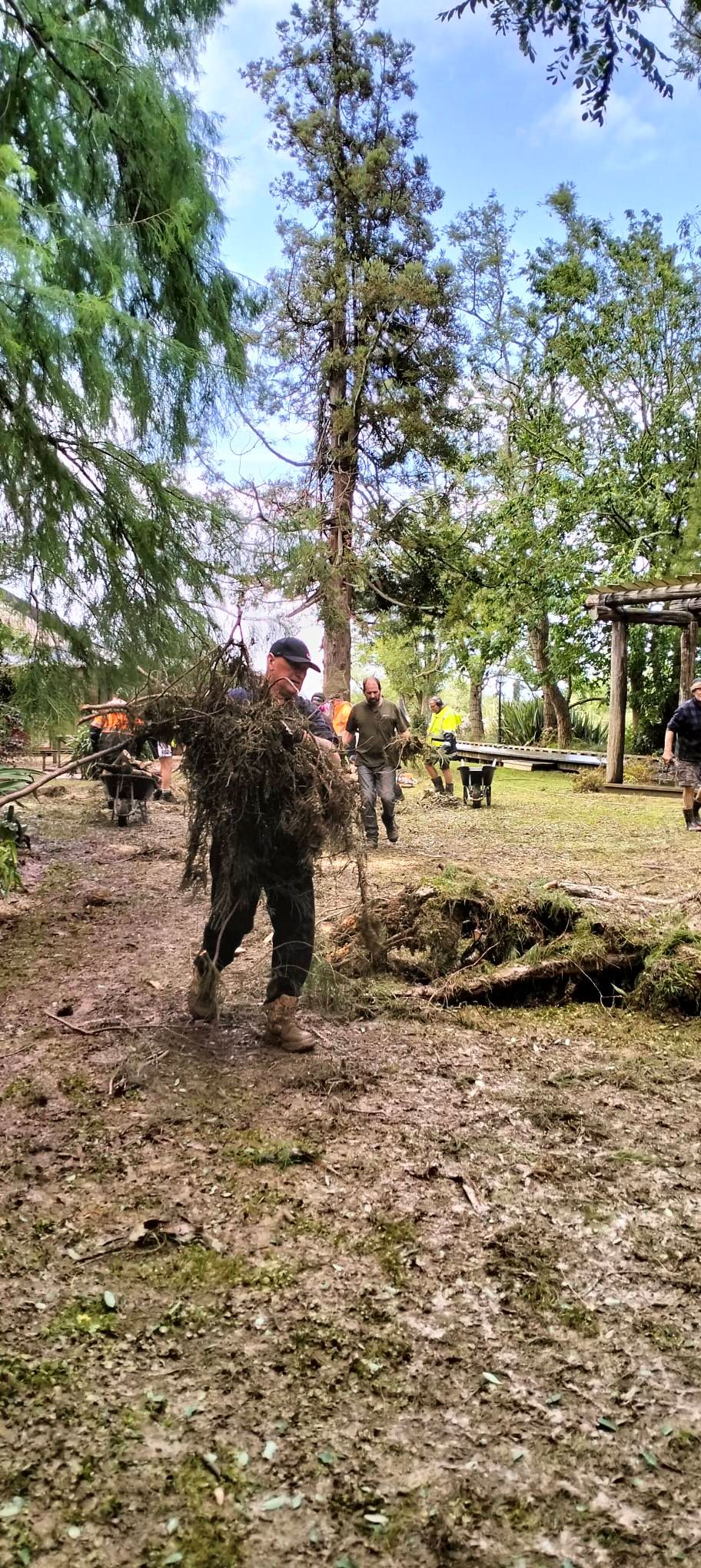
By 9am on January 24 the museum’s carpark was full, as more than 60 community members – many with no direct association to the park, turned up with chainsaws, rakes, trailers, polearms and other tools in hand.
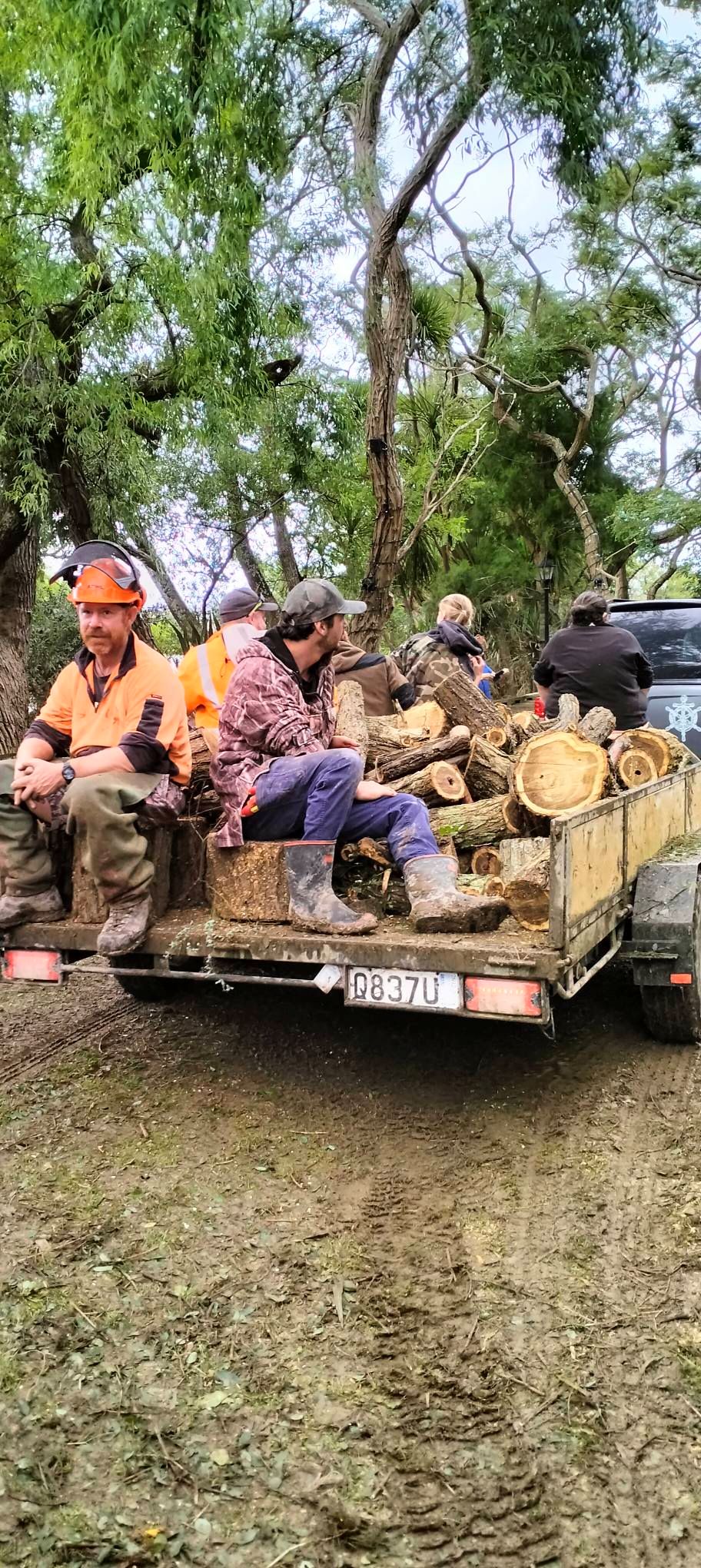
“The troops just kept coming – they came in their PPE gear and their goggles, with baking and trailers. It was incredible,” Fleur said.
“There must have been at one stage, I’d say more than 10 guys just on chainsaws and trailers backing in. There was a guy that brought in a big cage trailer. Just people everywhere.”
By midday the work was largely done.
“It was just amazing. We would have left here broken every night for the next two months, trying to deal with what we had in front of us,” Fleur said.
“I love [our] community. And them shining like that – it’s just the typical Kiwi way, isn’t it? You know, I’m very mindful. I was a bit reluctant doing that post with the devastation everywhere else. I knew that we’d been hit hard, but, gosh, other places have been hit way harder.
“But it’s not just what they [did] for the park. I think it lifts the spirits of all of those people that were here, too, and it impacts the community. You can see by the comments on the Facebook page, it warms everyone.”
There is still plenty left to do at the park, as the team’s attention now turns to restoration.
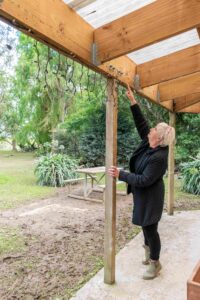
Evidence of the storm is still visible: the lowest third of the trees and all the underlying brush are brown with silt. In the river, a downed tree blocks the canal, preventing the historic paddleboat from leaving its pontoon. And muddy tracks still crisscross the lawns.
But it’s much better than it could have been.
“We were incredibly lucky. Most of the artefacts are up there in the main museum – down here, our biggest tragedy is the loss of our big trees,” Fleur said.
“You look back down there and it feels quite sad, because that canopy through there was beautiful. [And the lights] have all been totally submerged and because of the movement in the trees some have broken off.
“We’re still trying to get in touch with an arborist, because we’re not sure on the stability of some of the [remaining trees]. But with what the community has done for us, we’re in a pretty good position.”