A job offer in 2010 set in motion a decade-long journey of research into the life of pioneering timber merchant and ironmonger John Read, a story now chronicled in a newly-released book.
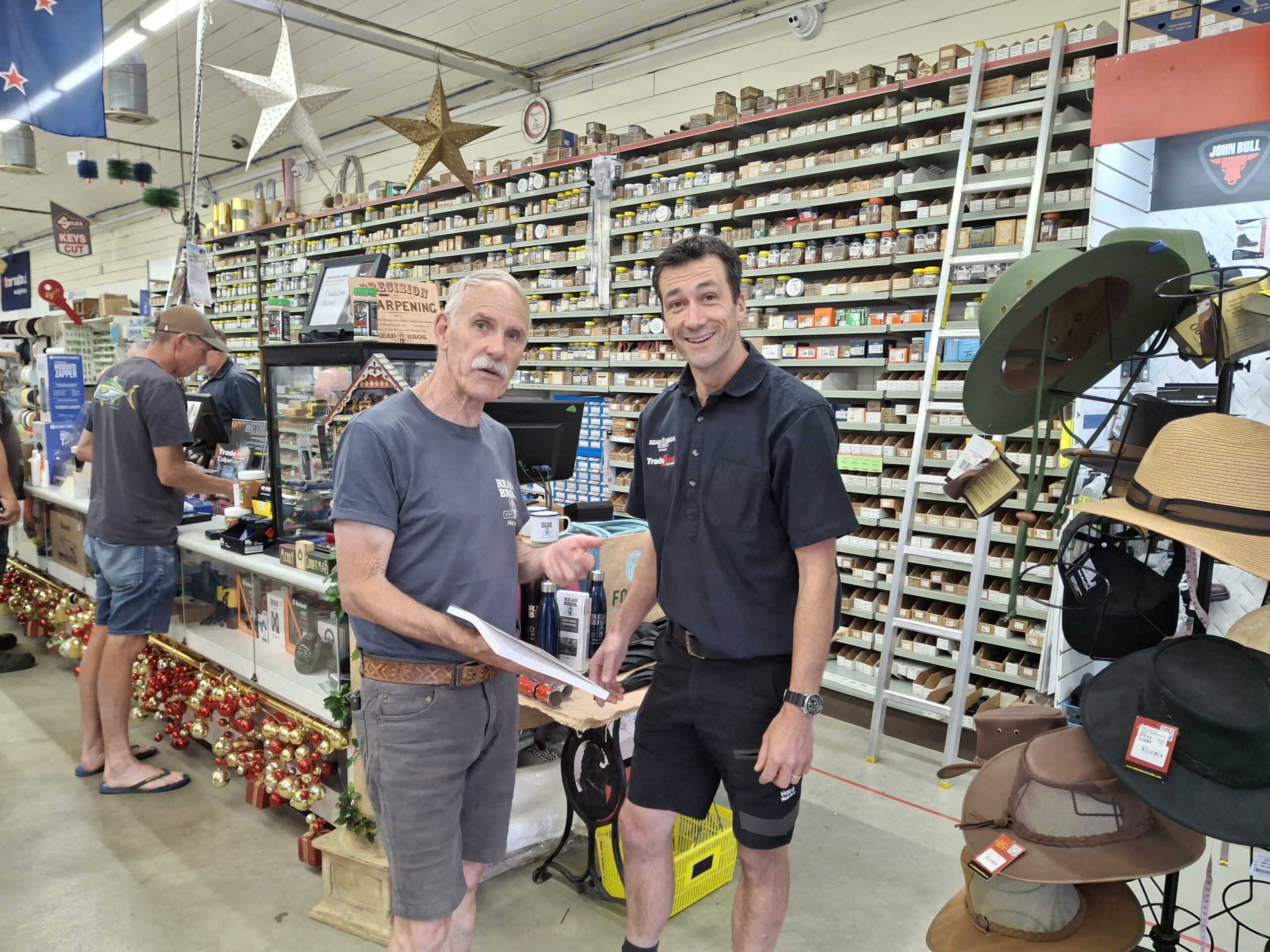
Russell Skeet, Thames historian and the author of Beyond Gold, told The Profile his interest in John Read was sparked the day he stepped into Read Bros Hardware on Pollen Street to begin work for then-owner Stuart Read.
“The notion of working for an old Thames business, that was still in the ownership of the founding family, appealed to me because of my interest in local history.”
Russell said John Read established his business as a timber merchant in September, 1867 at Brown Street, Grahamstown, barely one month after the goldfield was opened.
He then established a second branch of his business at Shortland at least as early as 1881.
The Brown Street, Grahamstown, site was sold in 1933, and by 1935, his son Arthur had closed the Shortland store and relocated the hardware store to the present 308 Pollen Street site.
The 150th anniversary of John Read establishing his business at Brown St, celebrated in 2017, piqued Russell’s interest in writing a book about the Read family business.
However, the idea was quickly put on hold due to his full-time job and the growing realisation of just how complex the project would be, he said.
“As my research project developed, it became evident that Read was a more complex character than I imagined,” Russell said. “For his story to be properly understood, it needed to be set against the bigger backdrop of the changing ‘boom and bust’ fortunes of the town.
“My 10-plus years of research revealed the story of a man of more than ordinary attributes, who was well connected with other leading businessmen and influential personalities in Thames. He was involved in a range of business activities and adapted to changing economic prospects. His involvement in local politics was short-lived, but he held positions on other boards and societies. He was a respected parishioner in the Anglican Church and the governance of the Parawai School. Most of all, John Read supported his family and their continued welfare and prosperity.”
And so, Russell said, his research grew both deeper and wider, reflecting the “increasingly obvious complexity” of the subject and his interest in it.
In the process, he also came to appreciate just how rich, diverse, and sometimes perplexing Thames’ own history is.
“My most challenging issue in researching and compiling the narrative was staying on focus and ‘in the zone.’
“Thames’ history is deeply interesting, diverse, challenging, and at times perplexing. A close examination of our history, and the people who made that history, reveals, in smaller scale, most of the elements that shaped New Zealand’s history – and it was easy to be drawn into side-bar topics that, while providing some context to the story, did not, directly, relate to John Read, the Founder,” he said.
“One of the beautifully distracting issues was that of tangata whenua, specifically, the capability and prescience of rangatira who were bound up in the unfolding story of the Thames and its’ development – a story waiting to be revealed; a story that will assist in positioning Māori in the complexities of today’s politics.”
Beyond Gold is available to purchase from Read Bros Hardware and Carson’s Bookshop, both along Pollen Street, Thames. Copies are limited.
“To those who have purchased Beyond Gold, thank you for having an interest in our local history – use the book as a springboard into enquiry about your own whakapapa,” Russell said.
BY KELLEY TANTAU